If you’ve seen someone say “faux pas” in a comment section, group chat, or dating-app convo and felt confused, you’re not alone. It’s one of those terms people pretend to understand but secretly Google later. And because it’s borrowed from French, it looks intimidating especially for non-native English speakers.
But in modern internet culture, faux pas meaning is actually simple: it’s a casual way to call out an awkward social mistake.
And understanding it matters because you’ll see it everywhere TikTok comments, Reddit threads, Instagram captions, Discord chats, and even office Slack channels.
What Does Faux Pas Mean in Chat or Text
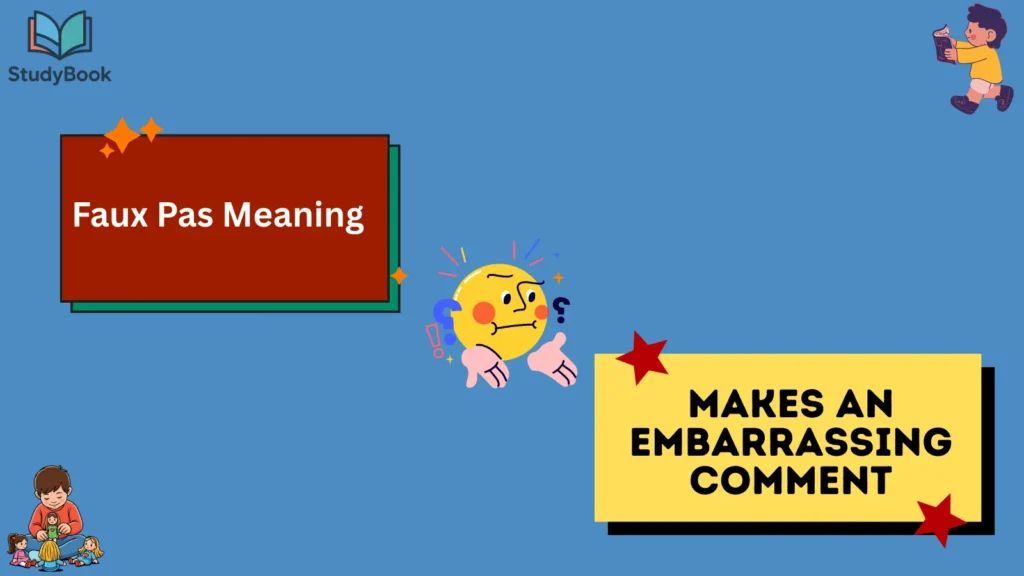
A faux pas (pronounced “foh pah”) means a social mistake, awkward slip-up, or behavior that breaks an unwritten rule.
In chat or text, people use “faux pas” when someone:
- Says something inappropriate
- Misreads the room
- Makes an embarrassing comment
- Breaks a social or cultural norm
- Does something awkward without realizing it
Simple definition for beginners:
A faux pas is when someone messes up socially and everyone notices.
Multiple Contexts
Depending on the situation, “faux pas” can mean:
- Funny mistake
Something small but embarrassing. - Serious social misstep
Something rude or poorly timed. - Fashion mistake
Wearing something that’s considered “wrong” for the setting. - Texting/online mistake
Saying something cringe or out of place.
Origin + Online Evolution
“Faux pas” is a French phrase that literally means “false step.”
Older generations used it mostly for formal etiquette and fashion mistakes.
But online culture simplified it.
By the 2020s–2026, it became a universal slang term for any awkward move—especially in comment sections and messaging apps.
How People Use Faux Pas in Real Conversations
People use “faux pas” across almost every platform. Here’s how it naturally shows up:
Texting
- Pointing out a friend’s awkward moment
- Teasing someone for saying something cringe
- Lightly calling out a mistake in a group chat
- Captioning an embarrassing moment
- Commenting on someone’s fashion mistake
- Responding to an influencer blunder
Snapchat
- Reacting to awkward Snaps
- Calling out someone who said the wrong thing at the wrong time
Discord
- Gaming etiquette mistakes
- Social misreads in group voice chats
- Meta humor in community servers
Dating Apps
- When someone opens with a weird line
- Misreading someone’s vibe
- Accidentally saying something awkward
Forums & Gaming Chats
- Breaking an unwritten rule
- Making a clueless comment
- Accidentally offending someone
Tone & Intent
“Faux pas” usually feels:
- Lightly teasing
- Mildly judgmental but not harsh
- Sometimes sarcastic
- Often humorous
- Occasionally serious
Using “faux pas” casually makes you sound socially aware without sounding aggressive.
Real Life Examples of Faux Pas in Text Messages
Example 1
Friend: “He called his teacher ‘mom.’
Total faux pas.”
Meaning: A harmless but embarrassing mistake.
Example 2
You: “Did I just like his pic from 2019?”
Friend: “Major faux pas.”
Meaning: Social slip-up while stalking someone’s profile.
Example 3
Group Chat: “Telling your boss ‘lol same’ was a faux pas.”
Meaning: You crossed a professional boundary.
Example 4
Dating App: “Starting with ‘hey sexy’ is such a faux pas.”
Meaning: Wrong tone, too forward.
Example 5
Discord: “Not muting your mic while your mom yells is a faux pas.”
Meaning: Breaks chat etiquette.
Context determines the impact—sometimes funny, sometimes cringey, sometimes serious.
Common Mistakes & Misunderstandings
1. Thinking it means “fake” or “fraud”
Because it looks foreign, people misread it. It doesn’t mean fake—it means awkward mistake.
2. Using it to insult someone harshly
It’s not meant for deep criticism. Don’t use it to attack someone personally.
3. Applying it to physical accidents
Spilling water isn’t a faux pas.
Calling your boss “dude” is.
4. Using it in overly casual situations
Saying “faux pas” in a very chill group might sound too formal or dramatic.
5. Mispronouncing it
“Fox pass” is a common mispronunciation—and ironically, that mispronunciation is a faux pas.
How to Respond When Someone Sends You Faux Pas
Safe Beginner Responses
- “Yeah, that was definitely awkward.”
- “True, I messed up.”
- “Didn’t mean to do that.”
- “Not my best moment.”
Funny Responses
- “I will never recover from this.”
- “Consider this my villain origin story.”
When to Ask for Clarification
- If you genuinely don’t know what your mistake was
- If the tone seems serious or tense
When NOT to Use It Back
Avoid using “faux pas” to correct someone older, a stranger, or in a formal work situation—it can sound passive-aggressive.
Is Faux Pas Still Used in 2026?
Yes—very much.
Current Trends
- Millennials still use it the most
- Gen Z uses it ironically or humorously
- It’s common in TikTok commentary culture
- It appears often in fashion, dating, and etiquette content
It’s not outdated, but its tone has shifted to something more playful and meme-like.
Where It’s Most Common Now
- Comment sections
- Group chats
- Workplace Slack channels
- Meme pages
- Style/fashion communities
Related Slangs & Abbreviations
Here are similar terms people often confuse with “faux pas”:
- Cringe – Something painfully embarrassing.
- Ick – Something that turns you off instantly.
- Awk – Short for awkward moment.
- Misread the room – Failed to understand the vibe.
- Blunder – A more serious mistake.
- Slip-up – A small error, usually accidental.
- Social fail – A broader, casual way to say someone messed up socially.
These are great internal-linking opportunities if you’re building a slang glossary.
FAQs:
1. What does “faux pas” mean in text?
It means someone made an awkward social mistake or broke an unwritten rule.
2. Is “faux pas” slang or formal?
Both. It’s originally formal, but online culture uses it casually now.
3. How do you pronounce “faux pas”?
“Foh pah.”
4. Can a faux pas be accidental?
Yes—most faux pas are unintentional mistakes.
5. Is “faux pas” rude to say?
Not usually. It’s mild, but tone matters. Don’t use it to shame someone harshly.
Conclusion:
A faux pas is simply a social mistake—something awkward, cringe, or out of place. It’s widely used across modern chat culture because it describes those everyday moments when someone slips up without meaning to.
Now that you understand the meaning, how to use it, how to respond, and where it fits in 2026 internet language, you can spot it instantly and use it naturally.
What’s your favorite chat abbreviation? Drop it in the comments.

I run upvoros with one goal: to make humor easy, smart, and unforgettable. From witty to playful word magic, I create content that feels fun, fresh, and human.