If you have seen ibid in a book, research paper, article, legal document, or online discussion, you may wonder what it actually means. Is it a slang term, a texting abbreviation, or something used only in academic writing?
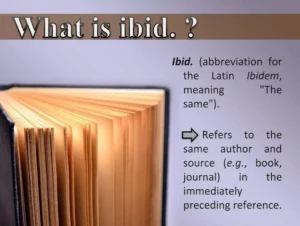
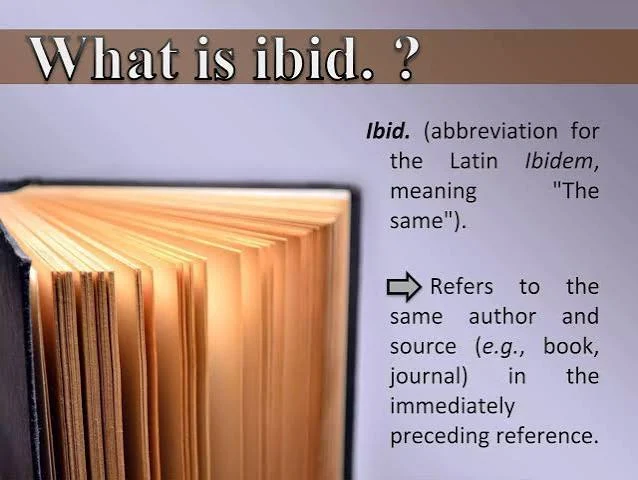
Ibid means “in the same place.” It comes from the Latin word ibidem and is mainly used in citations and references when the source being cited is the same as the source mentioned immediately before it.
Unlike popular texting abbreviations such as LOL or IDK, ibid is not usually internet slang. It is a traditional scholarly abbreviation that sometimes appears in digital articles, research documents, forums, and online discussions.
This guide explains the ibid meaning in text, where it comes from, how people use it, and when you should or should not use it. Updated for 2026, this article also clears up common confusion around ibid meaning slang and ibid in chat.
Table of Contents
What Does “Ibid” Mean in Chat or Text?
Ibid means “in the same place” or “from the same source just mentioned.”
It is short for the Latin word ibidem, which literally means “in the same place.”
In writing, especially academic and scholarly writing, ibid. is used to avoid repeating the full citation when the next reference points to the same source as the immediately preceding citation.
Simple example
Imagine a research paper says:
- Jane Smith, History of Modern Europe, 2020, p. 45.
- Ibid., p. 47.
The second citation means:
The same book by Jane Smith, but page 47.
So, if someone asks, “What does ibid mean in text?”, the easiest answer is:
Ibid means that the writer is referring to the same source or place mentioned immediately before.
What does ibid stand for?
Ibid stands for the Latin ibidem, meaning “in the same place.”
It is usually written as ibid. with a period because it is an abbreviation.
However, formatting rules can vary depending on the citation style, publisher, institution, or legal system.
Is ibid slang?
Usually, no.
Ibid is not normally considered internet slang or a casual texting abbreviation. It belongs more naturally to:
- Academic writing
- Research papers
- Books
- Footnotes
- Endnotes
- Legal writing
- Historical documents
- Scholarly publications
- Some online research and reference discussions
You are much more likely to see ibid. in a university paper than in an Instagram DM.
Where did ibid come from?
The word comes from the Latin ibidem, meaning “in the same place.”
Scholars and writers have used Latin abbreviations for centuries because Latin was historically important in European academic, legal, religious, and scholarly writing.
Over time, ibid. became a convenient way to tell readers that a citation refers to the same source as the citation directly before it.
Its purpose is simple: avoid unnecessary repetition while keeping references clear.
How People Use “Ibid” in Real Conversations
The most important thing to understand about ibid in chat is that it is not normally used like LOL, BTW, TBH, or IDK.
Someone usually does not type:
“Ibid, what are you doing tonight?”
That would sound unusual in ordinary texting.
Instead, you may encounter ibid. when people are discussing sources, research, books, citations, or documents online.
Ibid in texting
In normal texting, ibid is uncommon.
For example:
Person 1: What source did you use for that information?
Person 2: The article I sent above. Ibid.
This could technically communicate the idea of “the same source,” but it may sound overly formal.
A more natural text would usually be:
Same source as above.
or:
The same article I mentioned earlier.
Ibid on Instagram
Instagram conversations are generally casual, so ibid. is not common in regular comments or DMs.
However, it could appear in:
- Educational posts
- Research-related discussions
- History pages
- Academic content
- Book discussions
- Scholarly captions
- Comments about citations
For example:
“The quote comes from the same source as the previous slide — ibid.”
Here, the word is being used because the conversation involves references rather than casual slang.
Ibid on Snapchat
Ibid is not a common Snapchat abbreviation.
Snapchat conversations tend to favor short, informal language. If someone uses ibid. there, they are probably discussing a source or deliberately using formal language.
If your friend sends:
“Ibid.”
do not automatically assume it is a popular Snapchat slang term. Context matters.
Ibid on Discord
Discord is one place where you might occasionally see ibid., especially in communities focused on:
- History
- Literature
- Academic subjects
- Research
- Law
- Books
- Role-playing with formal language
- Debate and discussion
For example:
User 1: The information is from the same paper cited earlier.
User 2: Ibid.
In this situation, the meaning is essentially “same source as above.”
Ibid on dating apps
Using ibid on a dating app would be unusual.
If someone says:
“Ibid.”
during a casual conversation, they may be joking, being intentionally formal, or referring to something previously mentioned.
For example:
“What kind of music do you like?”
“Ibid.”
That would not be a normal use of the word. The person might be jokingly saying they have the same answer as something previously discussed.
Ibid in forums and gaming chats
In forums, ibid. can make more sense because discussions often involve quoted sources and previous posts.
For example:
“Where did you get those statistics?”
“Ibid. See the study linked in the previous comment.”
In gaming chat, however, it is not a standard gaming abbreviation.
A player saying ibid is probably using it humorously or referring to an earlier statement rather than using a gaming-specific term.
When does ibid sound natural?
Ibid sounds natural when:
- You are writing a research paper.
- You are working with footnotes or endnotes.
- You are discussing a scholarly source.
- You are referring to a source immediately mentioned before.
- You are writing in a formal or academic setting.
It can sound awkward when:
- You are casually texting a friend.
- You are chatting on Snapchat.
- You are flirting on a dating app.
- You are using it as a replacement for ordinary slang.
- The reader does not know what previous source you mean.
The key is context.
Real-Life Examples of “Ibid” in Text Messages
Here are practical examples showing how ibid works.
Example 1: Academic discussion
Alex: Which book did you use for that section?
Sam: The same one I cited in the previous paragraph. Ibid.
What Sam means: The source is the same as the one just mentioned.
Example 2: Footnotes
- Robert Jones, World History, p. 81.
- Ibid., p. 84.
What the writer means: The second citation refers to Robert Jones’s World History, but page 84.
Example 3: Online research
User 1: Is this information from the study you linked earlier?
User 2: Yes, ibid.
Meaning: Yes, it is from the same study previously mentioned.
Example 4: A joking text
Friend 1: What movie should we watch?
Friend 2: The one you suggested earlier. Ibid.
Meaning: The same movie mentioned previously.
This is understandable, but it sounds intentionally formal. A normal friend would probably say:
The same one you mentioned earlier.
Example 5: Forum discussion
User 1: What’s your source for that historical claim?
User 2: Ibid. Check the source in my previous comment.
Meaning: The same source cited immediately before.
Example 6: When context changes the meaning
Person A: I already said I prefer the first option.
Person B: Ibid.
Here, the person may be using ibid jokingly to mean:
“Same here” or “I agree with what you just said.”
This is not the traditional citation meaning. It is a playful extension of the original idea.
Common Mistakes & Misunderstandings
Because ibid is not common everyday slang, people can misunderstand it easily.
1. Thinking ibid is modern internet slang
One of the biggest mistakes is assuming that ibid was created for texting or social media.
It was not.
Ibid comes from Latin and has a long history in formal citation.
Its appearance online does not make it traditional internet slang.
2. Confusing ibid with “same”
In casual conversations, someone may use ibid jokingly to mean “same.”
But the traditional meaning is more specific.
Traditional meaning: Same source or location as immediately before.
Casual joking meaning: Same opinion, answer, or situation.
These meanings are related, but they are not identical.
3. Using ibid without a clear previous reference
Ibid depends heavily on context.
If you simply write:
Ibid.
and your reader has no idea what you are referring to, the abbreviation becomes confusing.
The reader needs to be able to identify the immediately preceding source or reference.
4. Assuming ibid always refers to an entire previous citation
Sometimes ibid. is followed by a new page number.
For example:
- Smith, Modern History, p. 20.
- Ibid., p. 25.
The source remains the same, but the page has changed.
So ibid does not necessarily mean every detail is identical.
It primarily signals that the reference is to the same source.
5. Using ibid in casual conversations
You can use ibid playfully, but it may sound strange if the people you are talking to are unfamiliar with it.
For everyday texting, clearer alternatives are usually better:
- Same
- Same here
- Me too
- Exactly
- As mentioned above
- Same source
- Like I said earlier
6. Assuming every citation style treats ibid the same way
Academic and professional citation systems have different rules.
Some styles traditionally use ibid., while modern versions of some style guides may prefer repeating shortened citations instead.
If you are writing an academic paper, follow the citation style required by your school, publisher, journal, or instructor rather than assuming ibid. is always acceptable.
How to Respond When Someone Sends You “Ibid”
If someone sends you ibid, your response depends on the context.
If they are discussing a source
You can simply acknowledge it:
Got it.
or:
You mean the same source as above?
If you are unsure
Ask for clarification:
Do you mean the same source you mentioned earlier?
This is a safe response because it confirms what they mean without making an assumption.
If they are using it jokingly
You can respond naturally:
Same here.
or:
Exactly.
If the conversation is academic
You can respond more formally:
Yes, I understand. You are referring to the source cited above.
Should you use ibid back?
Not necessarily.
If someone uses ibid and you understand it, you do not need to copy their wording.
In casual chat, simple language is usually clearer.
Instead of:
Ibid.
you can say:
Same.
or:
I agree.
The best response is the one that fits the tone of the conversation.
Is “Ibid” Still Used in 2026?
Yes, ibid is still recognized and used in 2026, particularly in academic, legal, historical, and scholarly contexts.
However, its role is different from that of modern internet slang.
Ibid and Gen Z
Gen Z users are familiar with many abbreviations created by online communication, but ibid is not generally part of mainstream Gen Z texting slang.
A younger person may encounter it while:
- Reading research
- Studying history
- Writing an essay
- Looking at academic citations
- Reading legal material
- Browsing scholarly content
It may also be used humorously online because of its unusually formal sound.
Ibid and Millennials
Millennials may encounter ibid in many of the same situations, especially through education, professional writing, books, and research.
Again, it is better understood as a formal abbreviation rather than a generation-specific slang term.
Where is ibid most common today?
You are most likely to encounter ibid in:
- Academic papers
- Footnotes
- Endnotes
- Scholarly books
- Legal writing
- Historical research
- Research-heavy websites
- Digital publications
- Online discussions about sources
You are much less likely to see it in ordinary:
- Instagram DMs
- Snapchat messages
- Dating conversations
- Gaming chats
- Casual texting
Is ibid disappearing?
The use of ibid. depends partly on citation style and publishing conventions.
Some modern academic systems favor clearer shortened citations instead of relying heavily on Latin abbreviations. This means that the word may appear less often in some types of modern writing.
Still, ibid has not become meaningless or obsolete.
Its core idea remains useful: quickly indicate that the reference points to the same source.
Ibid Meaning Slang vs Traditional Meaning
If you searched for ibid meaning slang, it is important to separate the two uses.
| Use | Meaning |
|---|---|
| Traditional | Same source or place as immediately before |
| Academic | A shortened citation referring to the previous source |
| Legal | May indicate the same cited authority, depending on citation rules |
| Casual online use | Sometimes jokingly means “same” |
| Modern texting | Not a common mainstream abbreviation |
So when you see ibid online, look at what surrounds it.
If it appears next to a footnote, book title, author, or page number, it almost certainly has its traditional citation meaning.
If it appears alone in a casual conversation, it may be a humorous way of saying “same” or “same as above.”
Related Slangs & Abbreviations
If you are building your understanding of online language, these terms can help you distinguish ibid from genuine texting abbreviations.
BTW
BTW means “by the way.”
It is common in texts, DMs, comments, and online conversations.
TBH
TBH means “to be honest.”
It is often used before an honest opinion or personal reaction.
IDK
IDK means “I don’t know.”
It is one of the most recognizable casual texting abbreviations.
IMO
IMO means “in my opinion.”
People use it to introduce a personal viewpoint.
FYI
FYI means “for your information.”
It is common in both casual and professional digital communication.
Same
Same is the closest casual equivalent to the playful online use of ibid.
For example:
“I could sleep all weekend.”
“Same.”
Unlike ibid, same is a normal part of everyday internet conversation.
IIRC
IIRC means “if I remember correctly.”
It is particularly common in forums, Reddit discussions, technical communities, and older internet culture.
FAQs:
What does ibid mean in text?
Ibid means “in the same place” and comes from the Latin word ibidem. In writing, it usually refers to the same source or reference mentioned immediately before.
Is ibid a slang word?
No, not traditionally. Ibid is a formal abbreviation used mainly in citations, academic writing, legal writing, and scholarly references. People may occasionally use it jokingly in casual online conversations.
What does ibid stand for?
Ibid stands for the Latin word ibidem, meaning “in the same place.”
Can ibid mean “same” in a text message?
Sometimes. In casual online use, someone may use ibid humorously to mean “same” or “same as what you just said.” However, this is not its traditional definition.
Should I use ibid in everyday texting?
Usually, no. If you simply mean “same,” “same here,” or “I agree” will sound more natural. Use ibid when the context involves a source, citation, or a deliberately formal or humorous tone.
Conclusion:
The simplest ibid meaning in text is “in the same place” or “from the same source mentioned immediately before.”
The word comes from the Latin ibidem and has traditionally been used in academic, scholarly, legal, and other formal writing.
Although you may occasionally see ibid in chat, it is not a mainstream texting abbreviation like LOL, BTW, or IDK. When someone uses it casually, they may be jokingly using it to mean “same” or “same as above.”
The safest way to understand ibid is to look at the context. If it appears beside a citation, page number, book, article, or footnote, it almost certainly refers to the same source. If it appears in a casual conversation, the sender may simply be using formal language for fun.
Once you understand that distinction, ibid becomes much easier to recognize and use correctly.
What’s your favorite chat abbreviation? Drop it in the comments!

I run upvoros with one goal: to make humor easy, smart, and unforgettable. From witty to playful word magic, I create content that feels fun, fresh, and human.