If you’ve seen someone drop DTB in a text, TikTok comment, or Snapchat streak and had no idea what it meant, you’re not alone. Thousands of people search for “dtb meaning” every day because the term shows up everywhere, especially in Gen Z chats.
Understanding DTB matters because it’s not just another random abbreviation. It carries attitude, emotion, and sometimes a whole vibe depending on who says it and where you see it. And because slang evolves quickly, DTB in 2026 doesn’t always mean the same thing it meant a few years ago.
This guide breaks it down simply, clearly, and with real usage—no dictionary fluff—so you feel confident when you see or use DTB in any conversation.
Table of Contents
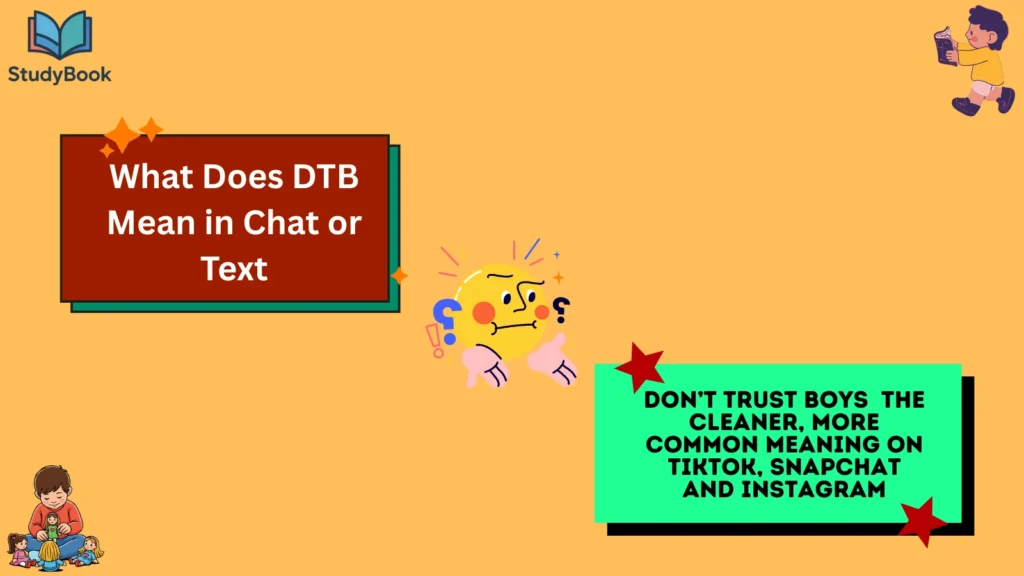
What Does DTB Mean in Chat or Text?
DTB most commonly means “Don’t Trust Boys” or “Don’t Trust Bitches.”
Which version someone means depends on who’s saying it, the tone, and the platform.
Here are the core meanings:
- Don’t Trust Boys – the cleaner, more common meaning on TikTok, Snapchat, and Instagram.
- Don’t Trust Bitches – used more casually in friend groups, rap lyrics, and gaming trash talk.
- Don’t Trust Anyone (generalized) – newer usage where people drop the gender entirely and use DTB as a general “trust no one” vibe.
A quick origin story
DTB surged through hip-hop culture in the late 2010s and early 2020s, especially in lyrics and captions. From there, it spread across TikTok trends and Snapchat slang as a shorthand for keeping your guard up after drama, cheating, or messy friendships.
By 2026, DTB is less aggressive and more “I’ve been hurt, I’m healing, stay back.”
How People Use “DTB” in Real Conversations
DTB isn’t just a statement—it’s a mood. Here’s how it shows up across platforms:
Texting
Used casually when someone’s venting or joking:
- After being ignored
- After a bad date
- When a friend shares messy relationship tea
Appears in:
- Captions
- Story text overlays
- Comments under breakup or “soft life” posts
Snapchat
Shows up in:
- Snaps after a mood swing
- Streak chats when someone feels betrayed
- Private stories titled “DTB era”
Discord
Gamers use it more jokingly:
- After a teammate betrays them
- When someone steals loot
- When drama breaks out in the server
Dating Apps
Rare, but sometimes used ironically:
- “In my DTB era lol”
- “DTB but I like your profile picture”
Tone & intent
DTB can sound:
- Playful – joking with friends
- Annoyed – after someone disappoints you
- Flirty-ironic – “DTB but maybe you…”
- Serious – “I’m done trusting people” energy
If you actually use slang daily, DTB feels natural in a rant or mood-post but awkward in formal or new conversations.
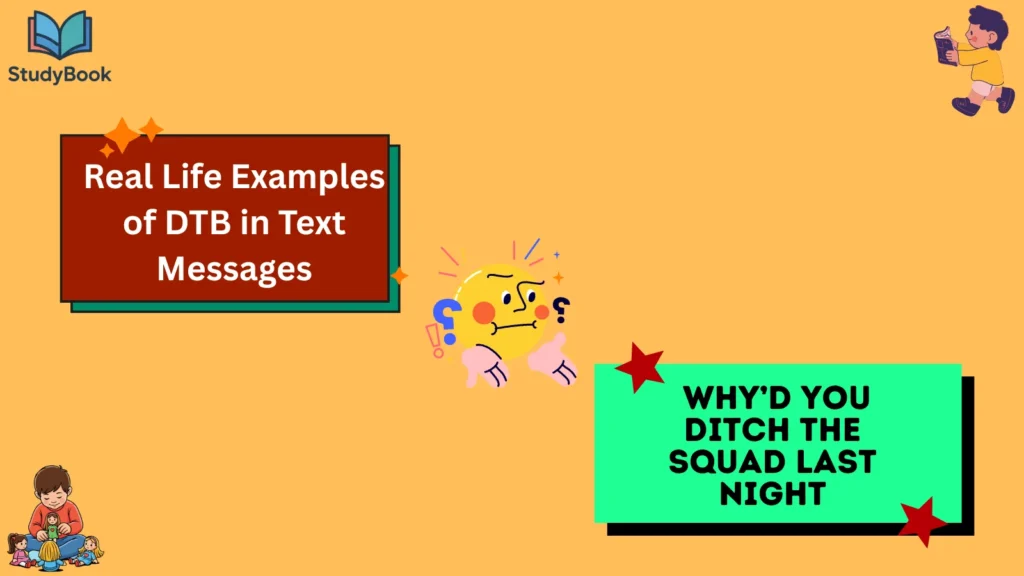
Real-Life Examples of “DTB” in Text Messages
Here are real chat-style examples so you can see the meaning clearly:
Friend A: He left me on read again
Friend B: Girl… DTB
Meaning: Don’t waste energy on him.
**
Person A:** Why’d you ditch the squad last night??
Person B: Bro stole my kill twice. DTB.
Meaning: Not actually deep—just gamer frustration.
**
Person A:** You going back to your ex?
Person B: Nope. DTB fr
Meaning: I’m serious this time.
**
Person A:** He said he’d change
Person B: Lmao he won’t. DTB.
Meaning: Don’t fall for it.
**
Person A:** Why are you so anti today
Person B: DTB mood
Meaning: Not trusting anyone tonight.
Common Mistakes & Misunderstandings
People often get confused by DTB because:
1. They assume it always means “Don’t Trust Boys”
It doesn’t. Gender depends on the speaker and context.
2. They think it’s always aggressive
It can be lighthearted or sarcastic, not just angry.
3. They use it with the wrong tone
Dropping DTB into a professional or new relationship chat feels forced and can come off rude.
4. They confuse it with unrelated abbreviations
DTB does not mean:
- Down to bang (that’s DTF)
- Detox break
- Don’t text back (completely different vibe)
5. They treat it like a literal rule
Most people saying DTB are venting, not giving life instructions.
How to Respond When Someone Sends You “DTB”
If someone texts you DTB, you have a few safe ways to reply:
1. Agreeing (supportive friend energy)
- “Honestly, yeah.”
- “Facts.”
- “You’re not wrong.”
2. Light reassurance
- “It’s okay, today was just a lot.”
- “Not everyone is like that.”
3. Playful replies
- “DTB era unlocked.”
- “Who hurt you now?”
4. Clarification (if unsure)
- “Wait, DTB as in don’t trust boys?”
- “What happened?”
When NOT to use it back
- If the person is genuinely upset and you’re not close
- In professional chats
- When someone is talking about serious emotional issues
Tone matters.
DTB Meaning Spanish
DTB Meaning Spanish
- DTB can have different meanings in Spanish depending on the context where the abbreviation appears.
- In Spanish-language social media, DTB may be used as an abbreviation for Dios te bendiga, meaning God bless you.
- Dios te bendiga is one of the most common interpretations when DTB appears in casual Spanish messages.
- You may see DTB in text messages, comments, captions, or online conversations as a short expression of goodwill.
- The abbreviation can be used at the end of a message, similar to a friendly blessing or farewell.
- DTB is especially easy to understand when the surrounding conversation has a religious, supportive, or affectionate tone.
- If someone writes DTB after giving advice or saying goodbye, it may simply express a wish for blessings or well-being.
- The exact meaning of DTB should always be checked against the sentence because abbreviations can have multiple interpretations.
- Spanish speakers may use DTB informally online because abbreviations make messages shorter and faster to type.
- DTB is not necessarily a formal Spanish expression, so its use is more common in casual digital communication.
- On social media, the meaning of DTB can depend on the person’s country, community, and personal texting habits.
- If you are translating DTB into English in a religious context, God bless you is usually the closest natural meaning.
- DTB may appear in uppercase letters because internet abbreviations are commonly written using the first letters of each word.
- When you see DTB in a Spanish TikTok comment or message, checking the surrounding words can help confirm whether it means Dios te bendiga.
- Understanding the context is important because DTB may have a completely different meaning in English-speaking online communities.
DTB Meaning TikTok
- On TikTok, DTB can have different meanings depending on the video, comment, creator, and online community using the abbreviation.
- One common meaning of DTB in a Spanish-speaking context is Dios te bendiga, or God bless you.
- DTB may appear in TikTok comments as a short way to express support, kindness, or a blessing.
- If a Spanish-speaking TikTok user writes DTB at the end of a comment, it may function like a brief friendly goodbye or blessing.
- The meaning of DTB can change when it is used in English-language TikTok slang, so context is essential.
- TikTok abbreviations often develop different meanings within specific communities, trends, fandoms, and comment sections.
- A DTB comment under religious or inspirational content is more likely to refer to Dios te bendiga.
- If DTB appears in a meme or viral trend, its meaning may be unrelated to the Spanish abbreviation.
- Checking the caption and nearby comments can help you identify what DTB means in a particular TikTok.
- DTB is generally informal on TikTok and is not something you would normally use in formal Spanish writing.
- Spanish-speaking creators may use DTB because it communicates a longer phrase quickly in comments or captions.
- The abbreviation can be especially common in supportive conversations where someone is wishing another person well.
- If you see DTB alongside Spanish words such as Dios, bendiga, oración, or fe, the religious meaning becomes more likely.
- When translating a Spanish TikTok comment containing DTB, the surrounding message should be considered before choosing the English equivalent.
- The safest way to understand DTB on TikTok is to identify the language and context first rather than assuming it has one universal meaning.
Is “DTB” Still Used in 2026?
Yes, but differently.
Gen Z
Still uses DTB in:
- Captions
- Mood updates
- Sarcastic texts
Usage is softer now—more “healing era” than “rage era.”
Millennials
Less common, mostly seen in:
- Memes
- Jokes
- Commentary on dating drama
Where it’s still popular
- TikTok
- Snapchat
- Discord
- Private stories (very common)
- Group chats
Is it fading?
It’s not fading, but it’s evolving. The gender-specific version is becoming less important, and the “trust no one” meaning is growing.
Related Slangs & Abbreviations
Here are terms people often search with DTB:
- DTN – Don’t Trust Nobody
- DTM – Doing Too Much
- STG – Swear To God
- FR – For Real
- LML – Love My Life / Laughing Mad Loud (varies by region)
- SMH – Shaking My Head
- LMK – Let Me Know
- IDC – I Don’t Care
These deepen your slang cluster and help build internal linking across slang pages.
FAQs:
What does DTB mean in text?
Most often it means “Don’t Trust Boys” or “Don’t Trust Bitches,” depending on context.
Is DTB rude?
It can be, but usually it’s joking or dramatic rather than serious hostility.
Is DTB the same as DTN?
No. DTN means “Don’t Trust Nobody,” which is broader.
Is DTB appropriate to use at work?
No. It’s informal slang meant for friends, social media, and casual chats.
Can guys use DTB?
Yes. Anyone can use it—meanings shift based on tone, not gender.
Conclusion:
DTB is one of those slang terms that looks simple but carries a ton of emotion and context behind it. Now you know the dtb meaning, how to read it, when people use it, and how to reply without sounding confused or out of the loop.
Modern chat moves fast, but once you learn the patterns, it becomes way more fun and way less confusing.
What’s your favorite chat abbreviation? Drop it in the comments.

I’m the voice behind upvoros, mixing creativity with humor to craft puns that hit just right. When I’m not playing with words, I’m busy making content that feels fun, fresh, and relatable.